Project Description
The COVID-19 pandemic highlighted vulnerabilities in the global public health system, particularly in regions with high population mobility and uneven medical resources, such as the Mekong subregion. Increased interaction between this region and the Republic of Korea (ROK) underscored the need for closer cooperation in addressing non-traditional security challenges like epidemics. Notably, migrant workers, due to their legal, linguistic, and medical access vulnerabilities often became overlooked in epidemic prevention efforts.
This project aimed to strengthen regional disease prevention and control capabilities through enhanced cooperation and information exchange. The focus was on establishing a robust collaborative mechanism to respond to potential future pandemics, improve overall response capabilities across countries, and provide a more secure public health system for nearly 250 million people.
Our Core Objectives
1
To develop guidelines and curriculum for controlling the COVID-19 outbreak using ICT among migrant workers.
Activities / Components
1
Established a detailed work plan and cooperation mechanism, laying the foundation for subsequent activities.
2
Conducted baseline studies to identify the challenges and advantages of Mekong subregion countries in epidemic prevention efforts, with a particular focus on ICT applications and migrant groups.
3
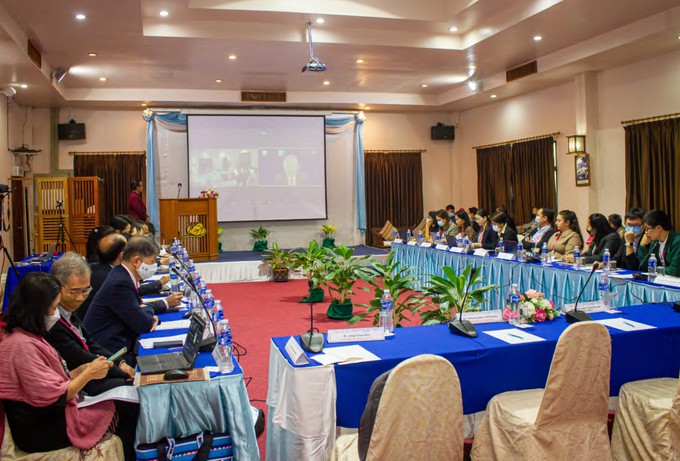
Organized multiple online and offline seminars, bringing together experts and policymakers from the ROK and CLMTV countries to jointly develop "epidemic management training courses" and "ICT management guidelines" suitable for on-site use.
4
Simultaneously conducted pilot studies in various countries to apply ICT tools to epidemic monitoring and response, and to record on-site experiences and feedback.
Results Achieved
-
Effectively facilitated knowledge exchange between the Republic of Korea (ROK) and the five Mekong subregion countries (CLMTV) through virtual and in-person workshops, training sessions, and consultative meetings. These events enabled stakeholders to share best practices, lessons learned, and real-time policy experiences in managing the COVID-19 pandemic.
-
Significant progress was made in implementing pilot studies in each Mekong country, focusing on the practical application of ICT tools in managing COVID-19 among migrant populations. These studies generated valuable data and insights that directly informed the development of two key deliverables: the "Guidelines on ICT Management for COVID-19 Response" and the "Training Curriculum," specifically tailored to frontline practitioners and health administrators working with vulnerable migrant communities.
-
The project produced comprehensive
documentation, including mid-term and final progress reports, as well as an After-Action Review (AAR), which evaluated the effectiveness, challenges, and adaptability of the implemented interventions. These documents served as both a record of achievement and a practical reference for future initiatives aimed at multi- country, multi-sectoral cooperation in public health.
Successful Factors/ Strategies
- The project's success stemmed from its implementation strategy of multi-national collaboration and cross-departmental integration, effectively coordinating cooperation between the Republic of Korea (ROK) and the five Mekong subregion countries under diverse institutional and resource conditions.
- The adoption of an evidence-based pilot research method, which included conducting ICT application tests in each participating country, ensured the practicality and operational relevance of the final training courses and management guidelines.
- Focusing on the vulnerability of migrant worker populations and addressing critical blind spots in epidemic prevention enhanced the project's practical significance and policy value.
- Full utilization of online platforms for knowledge sharing and remote communication maintained high- frequency and high-quality interaction and learning despite epidemic-related restrictions.
Future Strategies and Plans
- To ensure the long-term benefits of the project outcomes, future strategies should focus on building institutionalized cooperation mechanisms, such as promoting regular communication platforms and joint working groups at the regional level.
- The developed training courses and ICT management guidelines can be integrated into the national training systems of Mekong subregion countries or the standard operating procedures of the health sector for localized and regular application.
- Further data sharing and joint research should be encouraged to continuously update response strategies and enhance regional epidemic prevention capabilities.
- Finally, seeking support from multilateral institutions or expanding to address other non-traditional security issues could further replicate and scale the project model, fostering a larger-scale regional cooperation effect.