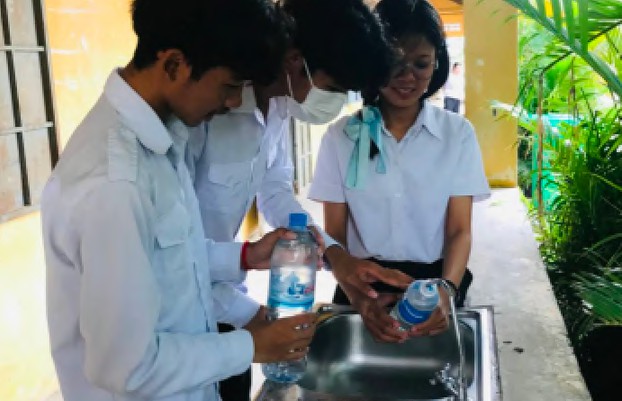
Rapid population growth, climate change, and environmental pollution have resulted in a scarcity of clean water, significantly affecting wellbeing, particularly in rural areas. Advanced technologies from developed nations like South Korea are essential for Mekong Basin countries to improve living conditions and address environmental challenges. This project involved the construction of a 20 m3 pilot Rainwater for Drinking (RFD) system at one rural hospital or school in each of the five Mekong countries (CLMVT), providing 500 liters of safe, sustainable drinking water daily. Local residents and officials were trained in system maintenance, and design and operational guidelines were proposed for potential future regulation.
To design, build, and operate a sustainable community-based RFD system at one rural healthcare facility or school in each of the five Mekong countries, providing over 500 people with 1 liter of drinking water daily.
To establish a local management committee responsible for the post-handover operation of the system, fostering a sense of ownership
To train local residents for the dissemination of this innovative drinking water supply system
To propose a financial model for constructing such systems at all hospitals and schools by mobilizing ESG or CSR funds through public-private partnerships.
To suggest legislation or regulations for the widespread implementation of community-based RFD systems throughout the country.
To share Korean knowledge and the cultural significance of rainwater management as a climate change strategy, inspired by King Sejong the Great's invention of the world’s first rain gauge in AD 1441.
Local governments selected a rural hospital or school based on factors such as location, water demand, technical capacity, and willingness of local authorities to support the project
A self- sustaining model for rainwater harvesting was developed, utilizing local labor, skills, and materials for catchment, storage, and drinking water techniques.
The system was designed to produce 500 liters of water per day, meeting National Drinking Water Quality Standards.
The committee took responsibility for the system’s operation, supported by one year of technical assistance and data monitoring.
Training was provided for operators, managers, and senior public officials
A draft design guideline for RFD systems was created for potential regulatory consideration