Project Description
E-commerce was considered to have the potential to increase profitability in agricultural markets by boosting sales and reducing search and transaction costs. As a result, the business community and governments in the Mekong region recognized the need to raise awareness about the application of e- commerce in agriculture. To identify the barriers to the development of agricultural e-commerce in the region, a research project was planned to assess the readiness of ICT and legal infrastructure.
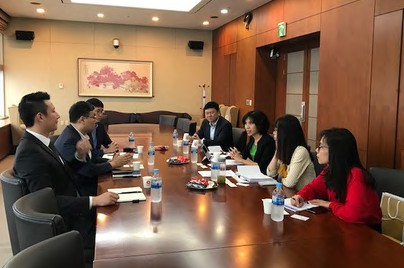
At the time, agricultural enterprises faced challenges such as information asymmetry and limited market access. To address these issues, a two-day seminar was organized to introduce the concept of agricultural e- commerce, provide an overview of regional development, and invite successful businesses to share their experiences. In addition, visits were conducted to local agricultural enterprises using e-commerce for sales, and support was provided to various countries to promote their agricultural products on South Korean e-commerce platforms.
Our Core Objectives
1
To identify the barriers to agricultural e-commerce in the Mekong region.
2
To improve the knowledge of government officials and MSMEs regarding agricultural e-commerce.
3
To assess the challenges MSMEs face in adopting e-commerce to enhance export capacity, and to develop a report recommending collaboration among Mekong countries and between governments and support organizations to facilitate agricultural e-commerce.
Activities / Components
1
Compiled the “Mekong National E- commerce and ICT Legal Basis Report” to assess obstacles to agricultural e- commerce development through field investigations and desktop research, providing policy references.
2
Held a two-day capacity-building seminar to promote mutual understanding of agricultural e- commerce between the public and private sectors and to enhance MSMEs’ capacity to apply e-commerce.
3
Selected representative agricultural products and assisted Mekong national enterprises in entering major e- commerce platforms in South Korea to expand export channels.
Results Achieved
-
A comprehensive report on the current state of e-commerce legal infrastructure in Mekong countries and the role of e-commerce in the development of regional Agricultural Value Chains (AVCs) was finalized. The report meticulously analyzed the opportunities and challenges in agricultural e-commerce development, serving as a crucial reference for both the public and private sectors in formulating relevant strategies and policies.
-
A two-day seminar was organized, featuring experts from South Korea and Mekong River countries who presented e-commerce concepts and options for agricultural products to representatives of agricultural enterprises and government agencies. Many stakeholders participated, and visits to local agricultural enterprises were included, promoting dialogue and deepening understanding of e-commerce models, policies, and regulations.
-
Regarding product promotion, the initial plan to support SMEs in entering the South Korean Trade e-market and disseminating product information was strategically adjusted during implementation.
Successful Factors/ Strategies
- Accurately identified needs and clearly defined development and export goals for agricultural e- commerce in response to low awareness and promotional challenges.
- Multiple parties collaborated to form a project working group, with South Korea providing technical and market support, while Mekong River countries contributed local resources to jointly expand the market.
- A variety of activities were carried out, including the publication of decision-support reports, the organization of seminars to raise awareness, and the promotion of agricultural products—providing comprehensive, multi-dimensional support for the project.
Future Strategies and Plans
- To further promote project achievements, efforts could focus on strengthening policy support, enhancing enterprise capabilities, expanding market channels, and deepening regional cooperation.
- Cooperation and exchanges among enterprises in the Mekong River region and with South Korean enterprises could be promoted by establishing a cooperation mechanism to increase support for SMEs in adopting e-commerce and to reduce associated costs and risks. Additionally, market research could be conducted to better understand demand.