Saline intrusion and climate change-related natural risks have increasingly affected countries in the Mekong region, particularly those in the lower Mekong River basin. Rising sea levels and altered river flows during the dry season have intensified sea tides and saline intrusion. Since mid-2019, the Mekong River’s water levels have remained critically low, severely impacting livelihoods and public health—especially for farmers who rely on river water for irrigation and freshwater aquaculture. These activities are highly sensitive to salinity and therefore face a high risk of loss. Combined with the broader effects of climate change-induced natural hazards, vulnerable populations in the Mekong region—particularly the poor and farming communities— have been disproportionately affected.
To improve the capacity to provide early warnings of natural disaster risks and saline intrusion, enabling local governments to proactively develop timely response plans to minimize damage to people and property caused by climate change
To improve access to information on saline intrusion; raise community awareness of natural disaster and salinity risks; and enhance adaptive capacity to climate change.
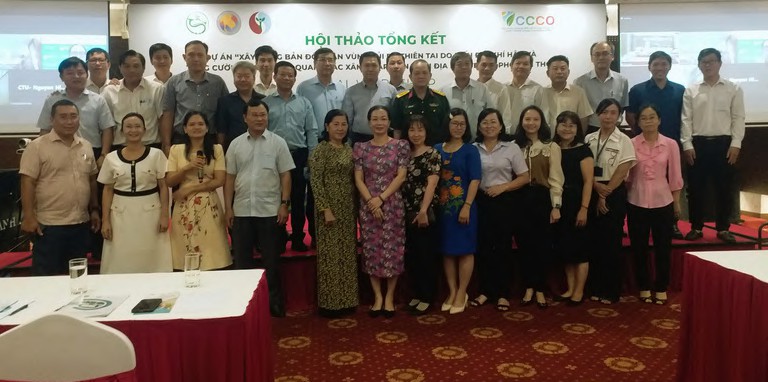
This component included project approval procedures, start-up seminars, consultant selection, on-site data collection, map development, and seminars to present preliminary results and assess public awareness.
This involved the procurement and installation of online monitoring equipment, site selection, establishment of data transmission and reception systems, data analysis and database development, training for equipment operators, report preparation, creation and dissemination of communication materials and databases, organization of training sessions, and presentation of final results.