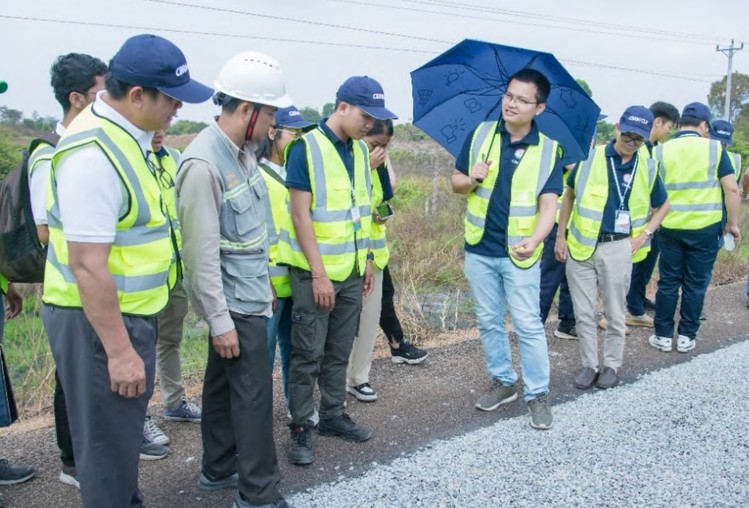
Cambodia relies heavily on its road network for transportation and distribution, making road infrastructure improvement critical to sustainable social and economic development. Roads provide access to essential services and connect the country regionally and globally. Although Cambodia has over 61,000 km of roads, the majority are rural, and only about 6,200 km are paved. Significant efforts in road construction, widening, and rehabilitation are ongoing. Early repair of road damage is essential to extending pavement lifespan. Therefore, improving road maintenance knowledge and skills among relevant officials and construction workers is key to ensuring the long-term durability and quality of road infrastructure.
To raise public awareness about the importance of road infrastructure maintenance through workshops and media outreach.
To design a standardized monitoring mechanism and evaluation strategies to assess training impact
To conduct and analyze a Training Needs Assessment (TNA) to inform project implementation.
To develop and pilot a curriculum on road maintenance, along with Learning Management System (LMS) software.
To deliver effective and efficient training courses on road maintenance for the target audience.
Raise awareness through workshops and promote it through media networks.
Identify training needs and trainee backgrounds, perform gap analysis, assess alternatives, report results, and recommend training plans.
Form a team, find consultants, define outcomes, develop syllabus and content, design activities, and develop LMS software
Produce materials, pilot and revise the curriculum, recruit and train facilitators, and implement training (physical/virtual formats, including lectures, workshops, webinars, discussions, site visits, practicums, and assignments).
Design M&E mechanisms and strategies for formative and summative assessment, and suggest procedures for collecting reliable and valid information and reporting.